| Genre | Science fiction |
| Title | Path Forward |
| Themes | Environmentalism • Sustainability • Equality • Pacifism • Conflict between ideals and pragmatism |
| Setting | Distant exoplanet colony |
| Plot Summary | A group of humans fleeing environmental catastrophe on Earth establish an advanced, sustainable civilization guided by principles of equality, pacifism and environmental harmony. However, a faction emerges that seeks to abandon these ideals and revert to the competitive, resource-exploitative model of the old world. The protagonist, a young scientist, uncovers this conspiracy and has to fight to preserve the colony's peaceful way of life. |
| Main Characters | Protagonist: Young scientist • Antagonists: Faction seeking to undermine the colony's ideals |
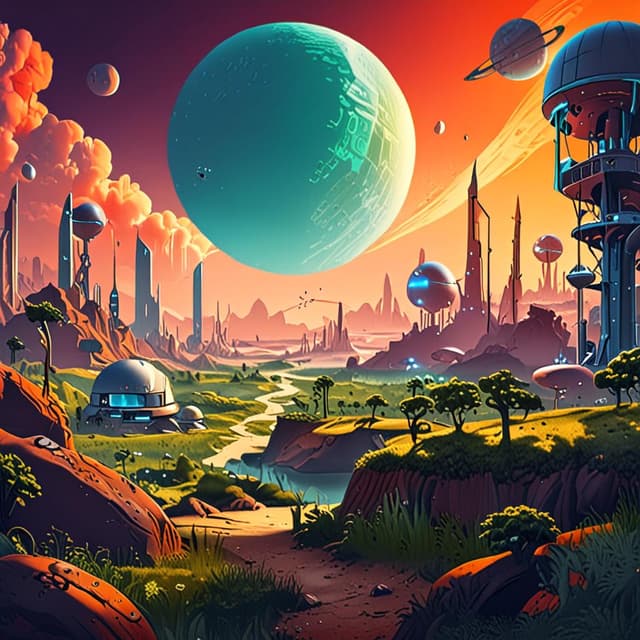
''Path Forward'' is a 2022 science fiction novel by author Adrian Westlake. Set on the distant exoplanet colony of Selene, the story depicts a utopian human society that has fled the environmental collapse of Earth to build a new civilization guided by principles of equality, pacifism and sustainability.
In the late 21st century, growing climate change, ecological degradation, and resource depletion on Earth led to widespread famine, conflict, and the collapse of many nation-states. A diverse group of scientists, engineers, and political activists recognized the need to establish a new, sustainable human settlement elsewhere in the solar system.
After years of planning and preparation, this coalition of "Pathfinders" launched a massive generational colony ship to the potentially habitable moon of Saturn, Selene. Carrying over 100,000 colonists, the ship arrived in 2146 and the settlers immediately set to work terraforming the moon's surface.
Over the next century, Selene was transformed into a lush, verdant world capable of supporting human life. The colonists organized themselves into a confederation of self-governing, democratic communities bound by a shared Constitution emphasizing environmental protection, technological advancement, and the abolition of poverty, hierarchy and conflict.
By the time of the novel's events in 2246, Selene has become a prosperous, technologically-advanced civilization. Advanced renewable energy, vertical farming, water reclamation, and closed-loop manufacturing systems have enabled a high standard of living for all. The colony's educational system provides universal access to science, engineering, and the arts. Automation has eliminated the need for manual labor, freeing citizens to pursue intellectual and creative pursuits.
Selene's politics are organized around direct democratic principles, with local communities electing delegates to a central planetary Congress. There is no concept of private property or monetary currency - all resources are owned collectively and distributed equitably. Major decisions, including the colony's long-term developmental plans, are made through extensive public deliberation and consensus-building.
The colony also has a strong culture of pacifism. Selene maintains no standing military and resolves internal and external conflicts through non-violent mediation. Citizens are discouraged from engaging in aggressive or violent behavior. This ethos extends to the colony's approach to the exploration and settlement of other worlds, which is focused on cooperation and stewardship rather than exploitation.
However, this utopian vision is challenged when a faction emerges that seeks to abandon Selene's founding principles. Led by a charismatic scientist named Elise Vaughn, this group believes the colony has become too isolated, complacent and risk-averse. They argue that Selene must return to the competitive, resource-extractive model of the old Earth in order to expand and thrive.
Vaughn and her followers seek to seize control of Selene's central government, dismantle its sustainability systems, and reestablish a capitalist economic structure. They contend that only through unfettered technological progress and the unrestrained exploitation of celestial resources can humanity reach its full potential.
The novel's protagonist is Kiran Agarwal, a young researcher in Selene's advanced propulsion systems division. Kiran is drawn into the conflict when they uncover evidence of Vaughn's conspiracy to undermine the colony's leadership and seize power.
As Kiran investigates further, they must grapple with difficult questions about the nature of progress, the role of technology, and the balance between individual freedom and collective responsibility. Kiran also develops a romantic relationship with a member of the dissident faction, Nassrin Azari, adding a personal dimension to the struggle.
The story culminates in a climactic showdown as Kiran and their allies race to stop Vaughn's faction from carrying out a violent coup. In the end, Selene's citizens must decide whether to remain true to their founding ideals or succumb to the temptation of Earth-style ambition and domination.
''Path Forward'' was widely acclaimed upon its release for its vivid world-building, compelling characters, and exploration of timely themes around sustainability, technological utopianism, and the nature of human progress. The novel's depiction of a functioning, egalitarian society on another world has drawn comparisons to the works of Kim Stanley Robinson and Ursula K. Le Guin.
While fictional, many readers have seen Selene as an inspiring model for how humanity might build a more equitable, environmentally-conscious future. The novel has been embraced by advocates of solarpunk, anarchism, and other radical futurist movements. Its vision of an advanced, non-violent civilization based on principles of cooperation has sparked debates about the feasibility and desirability of such an society.
Yet the novel also acknowledges the challenges and vulnerabilities inherent in maintaining a utopian system. Vaughn's dissident faction highlights how the allure of power, individualism, and a return to familiar patterns of exploitation can threaten even the most thoughtfully constructed social order. This ambiguity has made ''Path Forward'' a touchstone for discussions around the trade-offs and potential pitfalls of envisioning radically different futures for humanity.
